
Puppy Training Essentials: From Biting Prevention to Socialization
Bringing home a puppy is exciting, but it does not take long for the biting, accidents, chewing, jumping, and bursts of energy to begin. These behaviors can be frustrating, especially when you are trying to figure out which problems your puppy will outgrow and which ones need training now.
Early puppy training gives you a chance to establish good habits before unwanted ones become part of your everyday routine. The goal is not to expect perfect behavior from a young puppy. It is to give your puppy clear communication, predictable routines, appropriate socialization, and positive experiences that help them grow into a confident adult dog.
At
Sit Now Stay, our approach to dog training in Lenexa, Kansas focuses on helping puppies and their people build that foundation together. From biting and potty habits to leash manners and socialization, the skills you work on now can make life easier throughout your dog's next stages.
Puppy Training Is About More Than Teaching Sit
Basic cues have their place, but successful puppy training is much bigger than teaching sit, down, or stay. Your puppy is learning about your home, your family, unfamiliar people, new environments, boundaries, routines, and how to communicate with you all at the same time.
That is why we focus on building a complete foundation. A puppy who understands how to engage with you, settle into a routine, respond to guidance, and confidently navigate new experiences has skills you can continue developing as they mature.
Starting early also gives you an opportunity to shape behaviors before they become established habits. Instead of waiting until pulling, jumping, door rushing, or ignoring you becomes a bigger problem, you can begin teaching your puppy what you would like them to do from the start.
Start With Clear Communication
One of the first things a puppy needs to learn is how to understand you.
At Sit Now Stay, our Marker Training System gives dogs clear feedback about their behavior. Instead of leaving your puppy guessing about what earned a reward or what you want them to repeat, markers create a communication system you can use throughout training.
We also teach Opportunity Engagement, which encourages your puppy to voluntarily check in and pay attention to you. Rather than constantly asking for attention, you begin developing a puppy who learns that staying connected to you is worthwhile.
Those communication skills become the foundation for everything else. Whether you are working on leash manners, recall, household behavior, or socialization, training becomes easier when your puppy understands how to learn with you.
How to Handle Puppy Biting and Mouthing
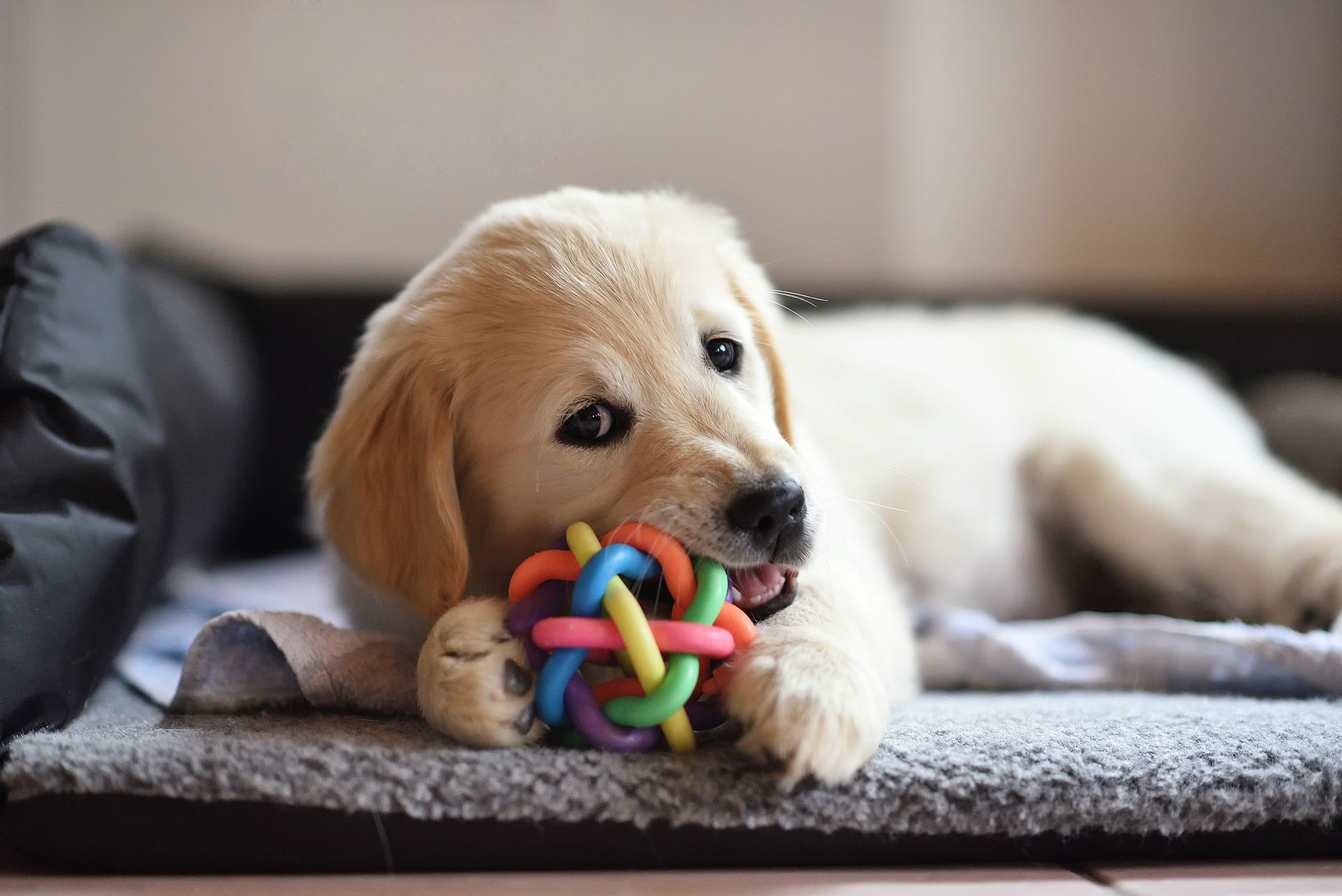
Puppies explore the world with their mouths. Biting, nipping, and mouthing are common during puppyhood, but that does not mean you have to simply wait for them to disappear.
Constantly reacting to the biting without looking at the bigger picture can become frustrating. Instead, think about what is happening before your puppy starts using their teeth. Are they overtired? Overstimulated? Looking for attention? Do they need an appropriate chewing outlet or a calmer routine?
Good puppy training combines management with teaching. Give your puppy appropriate things to chew, supervise interactions, interrupt inappropriate biting when necessary, and reinforce calmer ways of engaging with people.
Clear routines matter too. A puppy who gets appropriate training, enrichment, rest, and opportunities to use their energy productively is easier to guide than one who is constantly overstimulated.
The goal is not to punish your puppy for behaving like a puppy. It is to help them learn which behaviors work in your household and give them appropriate alternatives.
Build Potty Training Around a Predictable Routine
Potty training becomes much easier when your puppy's day is predictable.
Young puppies need frequent opportunities to go outside, especially after waking up, eating, playing, or spending time in their crate. Waiting for your puppy to tell you every time can lead to unnecessary accidents because they may not yet understand how to communicate that need.
Supervision is equally important. Every accident your puppy has indoors is a missed opportunity to reinforce the behavior you want. A consistent schedule allows you to anticipate when your puppy will likely need to go and create more opportunities for success.
As your puppy begins understanding the routine, you can gradually build more independence. Reliable potty habits take consistency, so focus on creating a pattern your puppy can understand rather than expecting immediate perfection.
Make the Crate a Normal Part of Puppy Life
A crate can be an important management and training tool when introduced appropriately.
Crate training helps establish sleeping and potty routines while teaching your puppy that there are times to settle and rest. It can also give you a safe way to manage your puppy when direct supervision is not possible.
Introduce the crate as a normal part of daily life rather than only using it when you leave the house or when your puppy gets into trouble. Short, appropriate periods of crate time can help your puppy become more comfortable settling independently.
Building that comfort gradually can make the crate a predictable part of your puppy's routine instead of something they associate with punishment.
Socialization Means More Than Meeting Other Dogs
One of the biggest misconceptions about puppy socialization is that your puppy simply needs to meet lots of dogs and people.
Good socialization is about helping your puppy experience the world without becoming overwhelmed by it.
That can include appropriate exposure to different people, dogs, sounds, surfaces, objects, movement, handling, and environments. Your puppy does not need to interact with everything they see. Learning to calmly observe something new can be just as valuable as interacting with it.
Quality matters more than quantity. Forcing a nervous puppy into an interaction or overwhelming them with too much stimulation can work against the confidence you are trying to build.
Instead, give your puppy opportunities to explore new experiences with structure and guidance. Watch their body language, give them time to process what is happening, and build difficulty gradually.
A well-socialized puppy is not necessarily one who wants to greet everyone. It is a puppy who is learning how to navigate the world with confidence.
Introduce Leash Skills Before Pulling Becomes the Routine
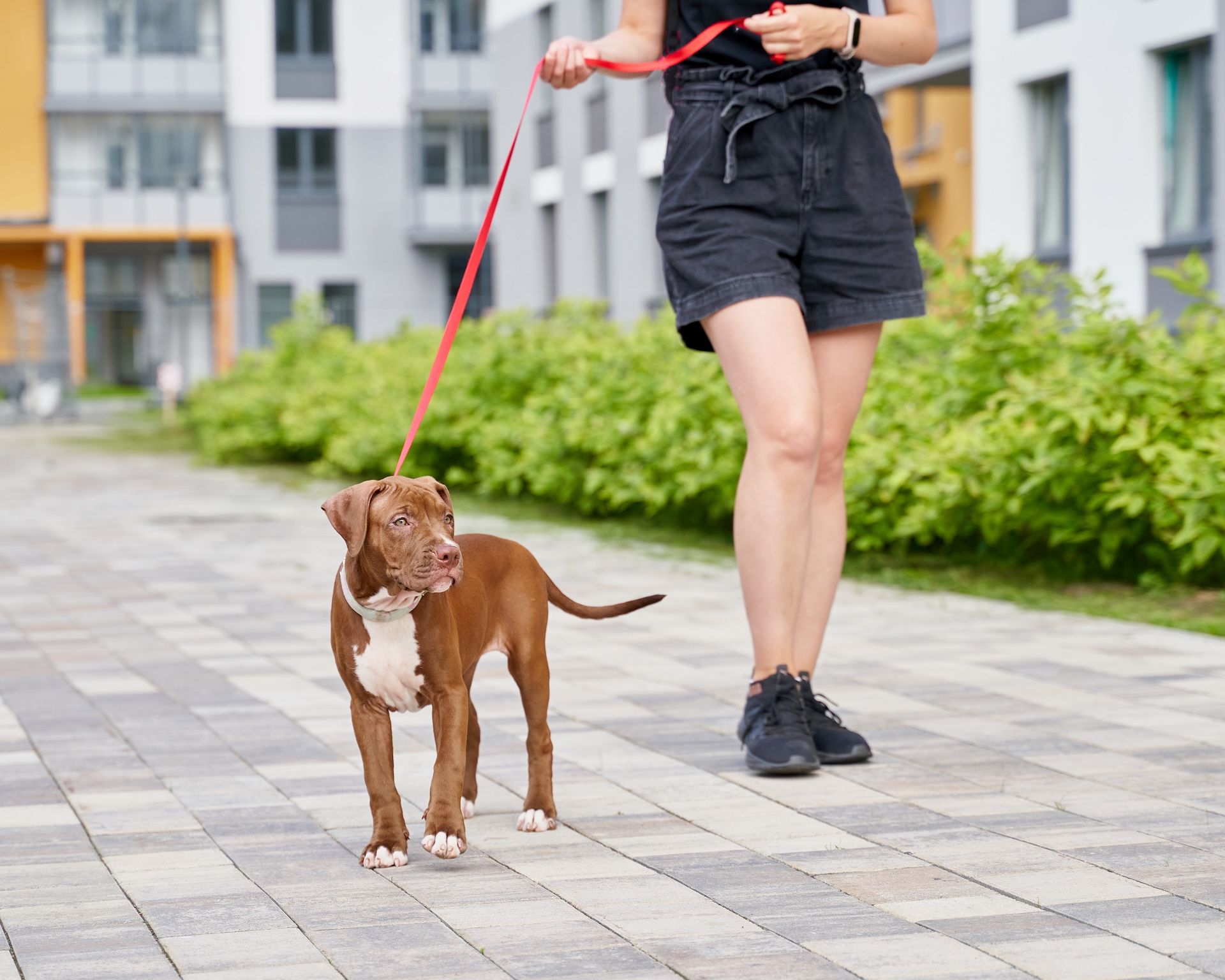
Your puppy does not automatically understand what a leash means.
Without training, many puppies learn that reaching the end of the leash and pulling gets them closer to whatever interests them. Practice that pattern long enough and pulling can become the default.
Early leash training gives you an opportunity to establish a different expectation.
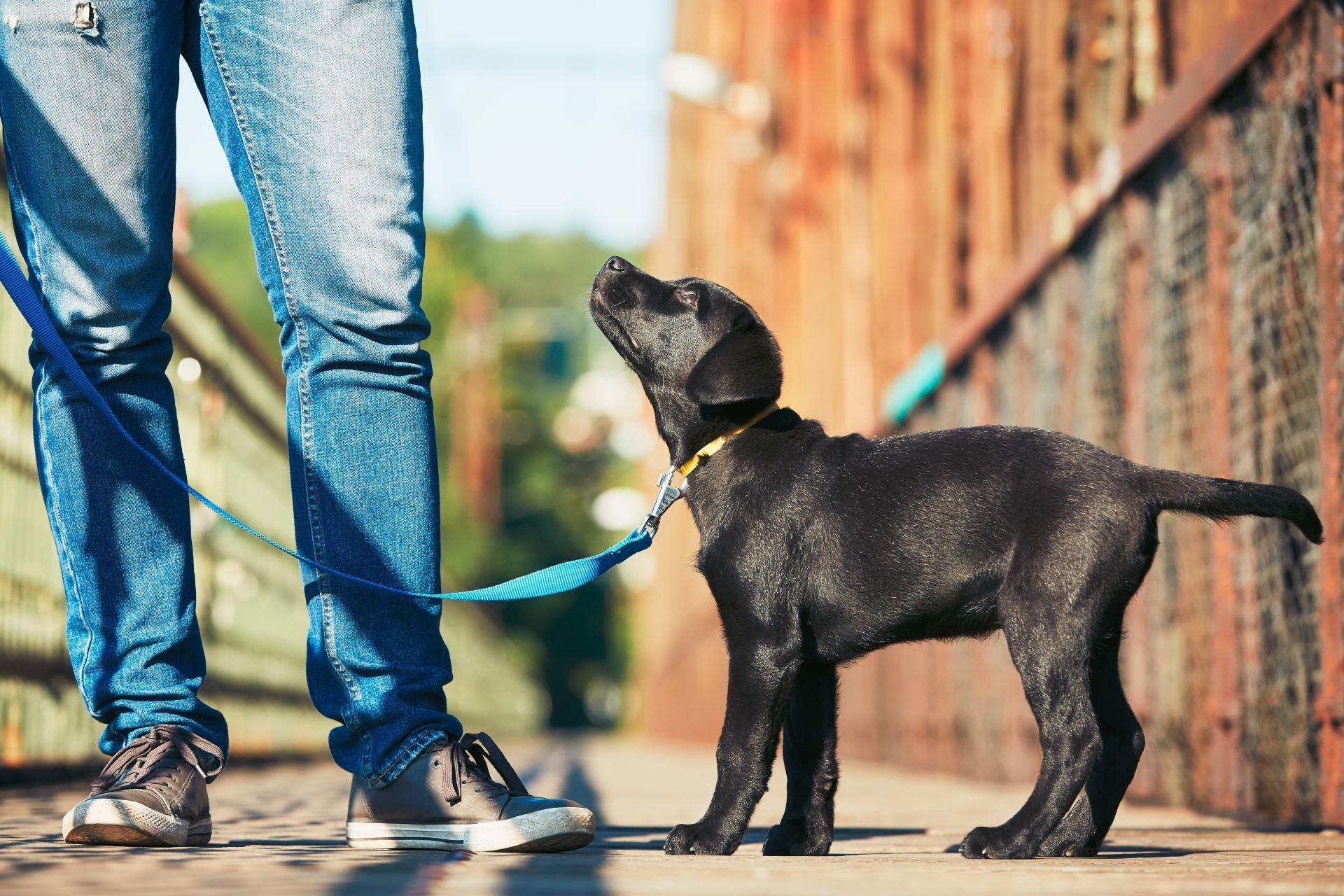
At Sit Now Stay, we teach a leash communication system rather than simply correcting a dog every time they pull. Puppies can begin learning how to respond to leash pressure and follow a consistent "Let's Go" pattern.
The goal is to teach your puppy how to move with you. Starting these skills early can make future neighborhood walks and public outings calmer for both of you.
Common Puppy Training Mistakes to Avoid
A few small changes in how you approach training can prevent a lot of frustration later.
- Waiting too long to start. Your puppy is learning habits from the moment they arrive home, whether you are intentionally training or not.
- Changing the rules. If jumping is encouraged sometimes and discouraged other times, your puppy has a harder time understanding the expectation.
- Overwhelming your puppy during socialization. More exposure is not automatically better. Controlled, appropriate experiences are more useful.
- Accidentally rewarding unwanted behavior. Attention can reinforce behaviors such as jumping, barking, and biting even when the attention is intended to stop them.
- Expecting too much too soon. Puppies are still developing physically and mentally. Training should challenge them without expecting adult-level self-control.
Consistency does not mean demanding perfection. It means making expectations as understandable and predictable as possible.
Get Help With Puppy Training in Lenexa, Kansas
You do not have to spend puppyhood wondering whether you are handling every biting episode, accident, walk, or new experience correctly.
Sit Now Stay has helped families build better relationships with their dogs through professional training since 2014. Our team can help you create a structured plan for your puppy while teaching you the skills you need to continue making progress at home.
If you are looking for dog training in Lenexa, Kansas, start by exploring our puppy training and dog training options and finding the program that fits your family.
Schedule a consultation today!
Recent Posts